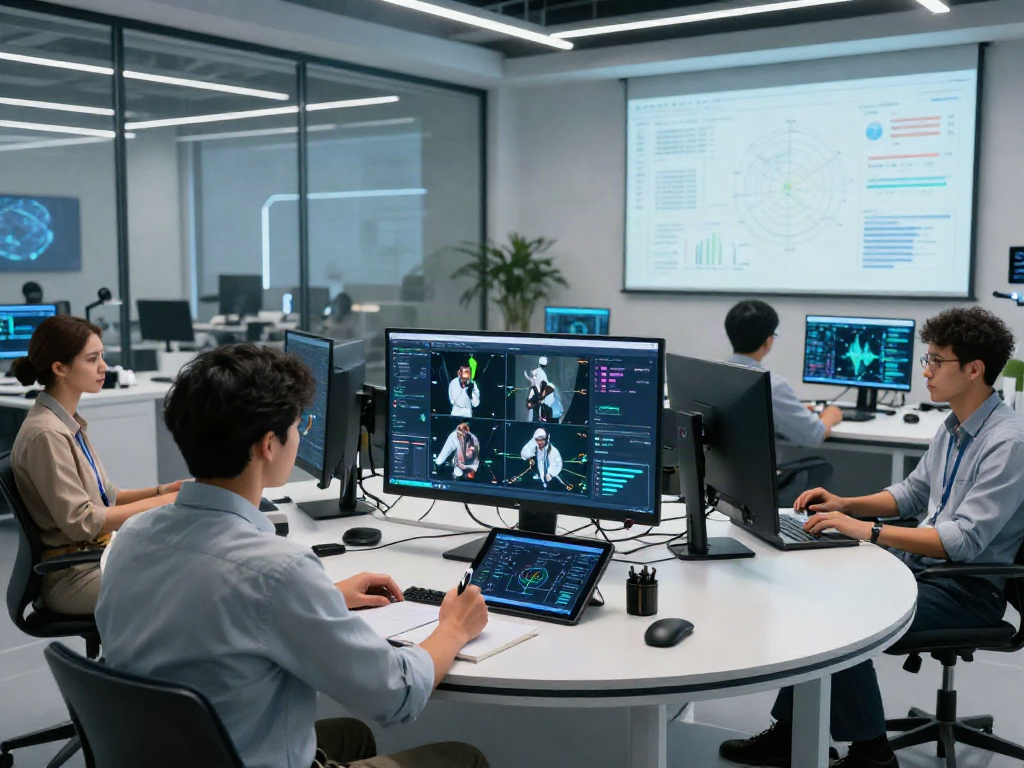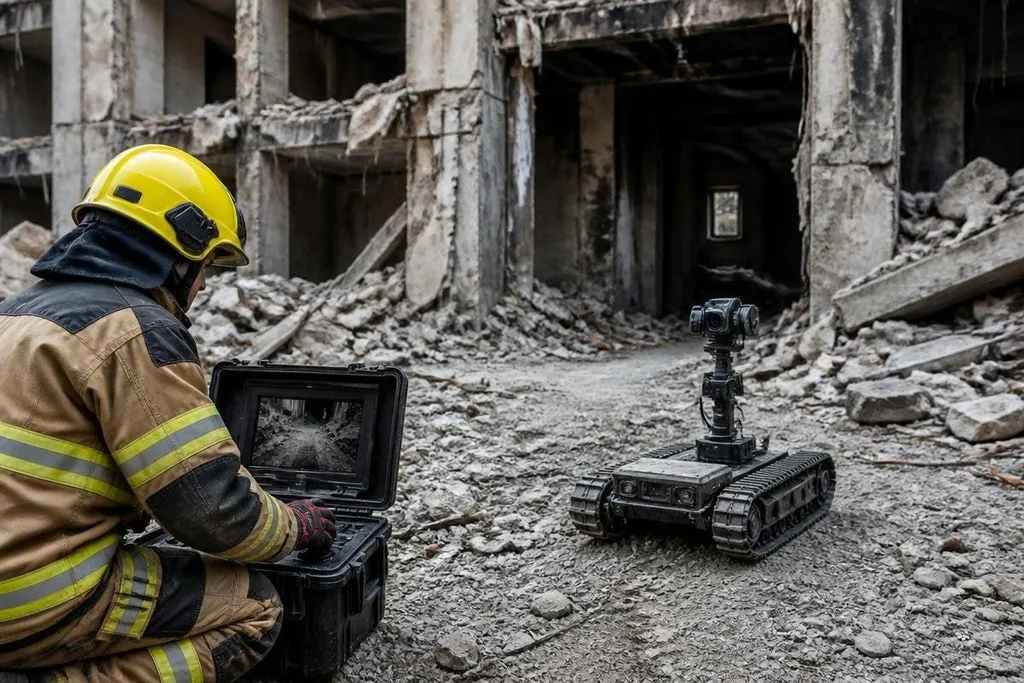
A rescue robot can send cameras, microphones, and sensors into a damaged building before a person enters. That changes the first decision from “Who goes in?” to “What can we learn from outside?”
- Ground robots inspect floors, tunnels, and rubble from a safe distance.
- Drones check roofs, open areas, and places blocked from ground access.
- Underwater robots search below the surface without putting a diver in the first search pass.
Where rescue robots help
Ground robots use tracks or wheels to carry cameras through areas with broken glass, loose concrete, smoke, or poor lighting. A tracked chassis can keep moving when a wheeled robot loses contact with the floor, though neither design can cross every pile of debris.
A thermal camera can show heat differences that a normal camera misses. That may help a team check rooms, vehicles, or rubble for signs of a person, but heat can also come from fires, engines, or warm pipes. The image needs a trained person who can read the scene.
LiDAR measures distance with laser pulses. Those measurements can help an operator see walls, gaps, and blocked routes as the robot moves. Dust, smoke, reflective surfaces, and moving objects can reduce the quality of that map.
Drones take a different path through the problem. They can reach rooftops, cliffs, flood zones, and large search areas without putting a driver or rescuer on the ground. Their limits are equally plain: wind, rain, low light, battery charge, and a lost radio link can end a flight before the search is complete.
The risks that matter in practice
The robot can fail before it reaches the person. A motor may stall, a track may break, or a camera may become covered with dust. Rescue crews then need a recovery plan, spare parts, and a way to continue the search without the robot.
Communication is another weak point. A teleoperated robot depends on a radio or network link between the machine and its operator. Thick concrete, metal structures, underground spaces, and distance can weaken that link, leaving the robot stopped or moving with old instructions.
Autonomous systems reduce the amount of direct control an operator needs, but they can also make the wrong choice without a person seeing the cause.
A route planner may read a dark opening as a clear path, or a person-recognition system may miss someone under dust and fabric. Rescue work leaves little room for blind trust.
The machine also adds work at the scene. Someone must carry it, charge it, check its sensors, keep people clear of moving parts, and record what the cameras collect. Footage may include injured people, private homes, or identifying details, so crews need rules for access, storage, and deletion.
A rescue robot’s screen can look clear while its wheels sit behind rubble or its radio link drops. The useful question is what the crew could do next, and reports on rescue machines from Robot24.com can tie that answer to a named test, date, and failure point.
Rescue robots are tools, not search teams
The strongest use case is early inspection. A robot can check a dangerous space, send back video, and help a commander choose a safer route before people enter. It can also keep watching a site while rescuers work elsewhere.
The machine still needs a clear job. “Search the building” is too broad for a reliable test. “Check the east corridor for heat sources, open doors, and blocked exits” gives the operator a defined task and a record of what the robot actually checked.
I'd treat a rescue robot as a remote set of eyes and tools, not a replacement for a rescue team. The people still decide where to search, how to reach someone, and when the machine has become a risk of its own.
A field decision guide
Use this check before sending a robot into a live scene:
- Name the hazard: fire, collapse, water, toxic air, or unstable ground.
- Match the platform: ground robot, drone, or underwater vehicle.
- Check the link: confirm radio range and a safe stop if contact fails.
- Set the task: define the route, sensor target, and return point.
- Plan recovery: carry a tether, spare battery, retrieval line, or second unit when the site allows it.
- Protect the data: limit camera access and set a clear storage period.
The next useful test is not a longer demonstration. It is a timed search in smoke, rubble, water, or weak radio coverage, with the robot’s failures recorded as carefully as its successful runs.